.svg)
Quality*
Workflows > Endpoints > Client Admin & Quality > Quality
Purpose: Manage quality assignments, deadlines, tasks, auditing information and quality document folders for the partner client (accounting office) using PowerOffice Go's Quality module. The service provides programmatic access to the engagement administration that mirrors the Quality module in the Go user interface.
* The quality service, is a collection of endpoints dedicated to accounting offices and the quality module in PowerOffice, and require both an access privelige and a partner client with Quality to be used. The endpoints reflect selected parts of the functionality in the quality module user interface on a partner client.
The service includes:
Endpoints to list, retrieve, create, update and delete quality assignments (engagements with the accounting office's clients).
Endpoints to retrieve and update deadlines related to a given assignment — including status, comments, dates and priority.
Endpoint to retrieve the tasks and services associated with a given assignment, with filtering for internal tasks and tasks available but not yet added.
Endpoint to list available auditing companies and their auditors, used when the customer is subject to audit.
Endpoints to retrieve quality document folders, providing access to the folder hierarchy for task documentation, assignment documentation and agreements.
Descriptions:
Assignments
Synchronize from Go:
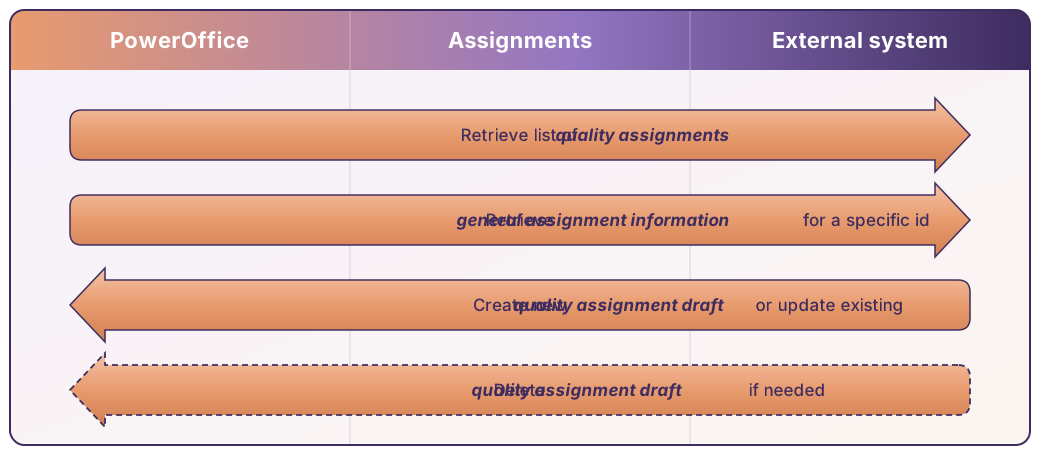
Retrieve the list of assignments from Go using desired filtering and fields parameters.
Retrieve single assignments by id to get the full details from the General tab.
Synchronize to Go:
Create a new assignment draft with the required general information.
Update an existing assignment via JSON Patch on the general fields.
Delete a draft if no longer needed. Active and archived assignments cannot be deleted.
Deadlines, Tasks & Auditors
Synchronize from Go:
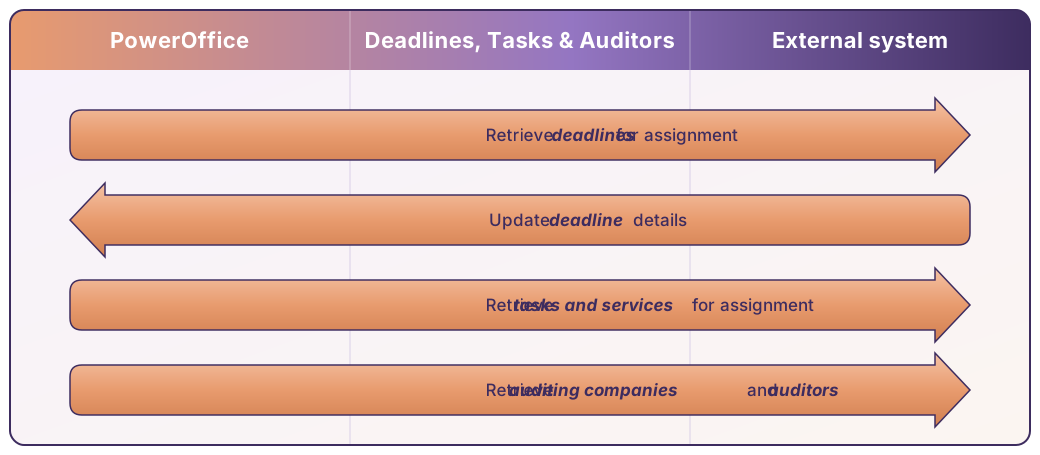
Retrieve deadlines for a given assignment, filtered by accounting year and optionally by status, date range, task or assignee.
Retrieve the tasks and services configured on an assignment — including service area, category, deadline-frequency settings and the assigned employee.
Retrieve the list of available auditing companies and their auditors as reference data, used when the customer is subject to audit.
Synchronize to Go:
Update the status, comments, dates, priority or assignee on an individual deadline as the work progresses. Status comments are appended to the deadline history.
Documents
Synchronize from Go:
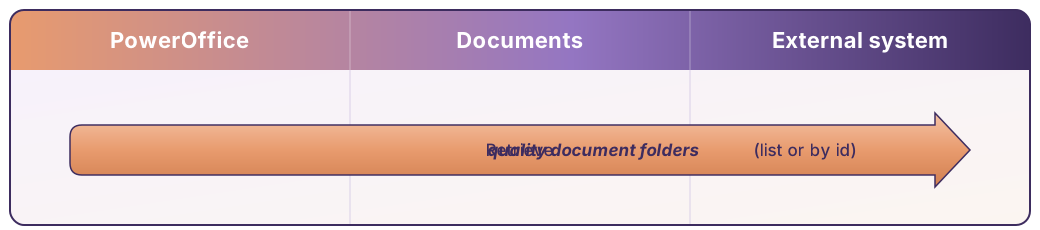
Retrieve the list of quality document folders on the partner client, with metadata such as folder name, folder type and parent folder.
Retrieve a specific folder by id.
The current endpoints expose folder metadata only. Capabilities to create folders, upload documents and retrieve their content are planned for future releases.
Prerequisites
Access to the
QualityAssignmentLightprivilege to list assignmentsAccess to the
QualityAssignmentGeneralprivilege to retrieve, create, update or delete assignment general information, and list auditing companiesAccess to the
QualityAssignmentDeadlinesprivilege to retrieve or update deadlinesAccess to the
QualityAssignmentServicesprivilege to retrieve tasks and servicesAccess to the
QualityDocumentsprivilege to retrieve quality document foldersCan only be used by partner clients with the Quality module
Related workflows:
Dictionary/Terminology:
Partner client: The Go client of an accounting office. Partner clients may access the Quality module.
Accounting office integration: An integration created by an accounting office, with access to the Quality privileges and intended use of the quality administration workflow.
Quality assignment: An engagement between the accounting office and a customer.
Deadline: A dated task instance on an assignment, typically auto-generated based on the task's frequency settings.
Subject to audit: Whether the customer is required to be audited; determines if auditing company and auditor are referenced on the assignment.